
Why the Best Organizing Systems Work With Your Tendencies
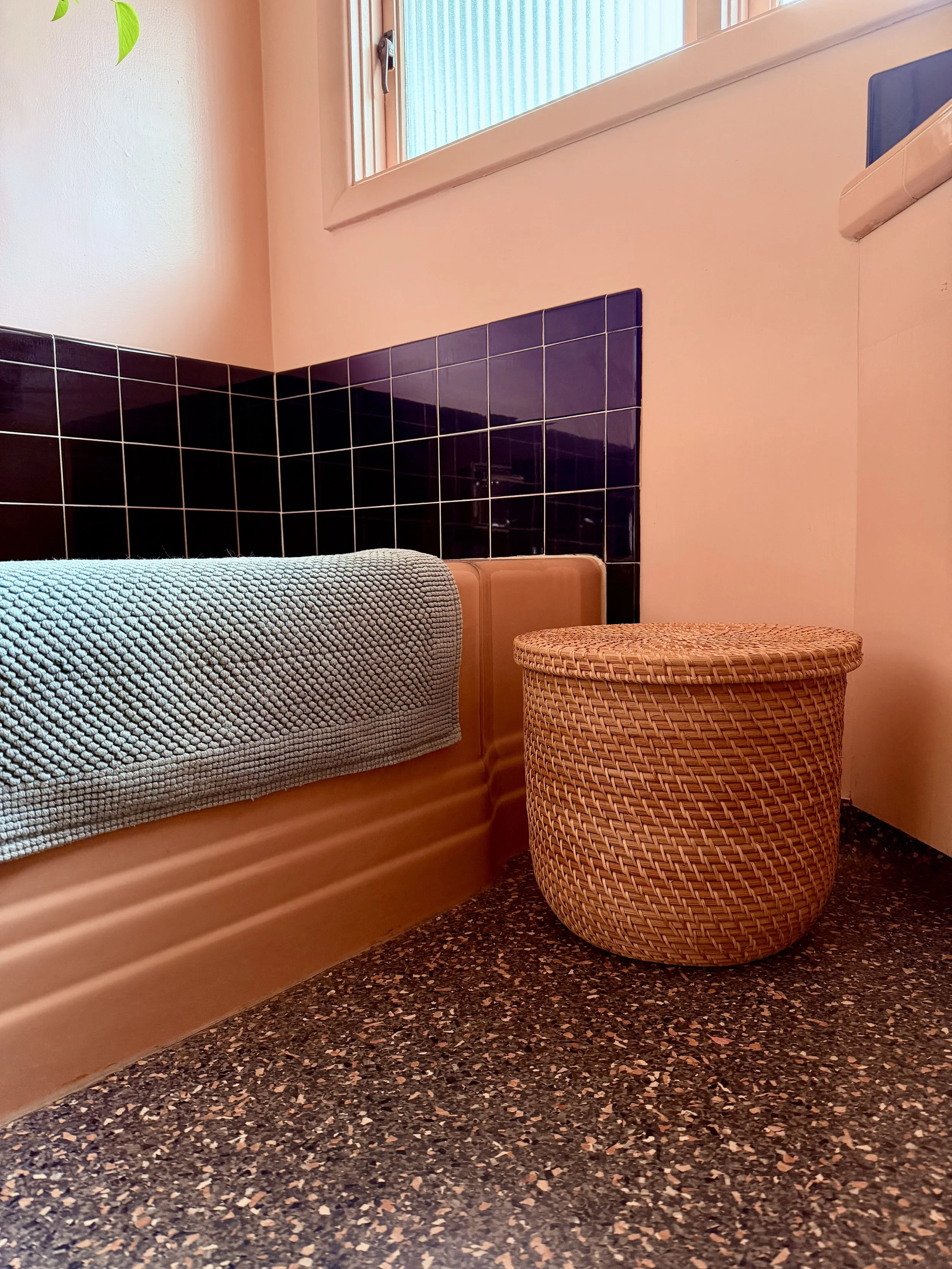
For the longest time, my daughter would take a shower and leave her dirty clothes on the bathroom floor.
Her laundry hamper was in her bedroom literally right next door, but somehow the clothes just never made it there.
At first, I approached it the way most of us probably would:
reminders.
“Please pick up your clothes.”
“Please put them in the hamper.”
“Hey lady, you forgot your clothes.”
But eventually, it hit me:
maybe the issue wasn’t my daughter.
Maybe the system just wasn’t supporting the behavior.
So we added a second laundry hamper in the bathroom.
And almost immediately, the problem disappeared.
That small change reminded me of something I talk through with clients all the time:
The best organizing systems usually work with your tendencies — not against them.
This is one of the biggest reasons organizing systems often fail: we “should” on ourselves and work against our natural tendencies.
I should be able to put my backpack away in my room.
I should be able to put my dirty clothes in the hamper in my bedroom.
I should be able to walk the trash outside every time.
But often, those “shoulds” don’t lead to better systems.
They just lead to more frustration.
Because many people assume organizing is about becoming more disciplined.
Trying harder.
Remembering better.
Maintaining things perfectly.
But most of the time, sustainable organizing has much less to do with perfection and much more to do with reducing friction.
It’s about paying attention to where things repeatedly bottleneck in your home and asking:
Could this system better support everyday life?
Because humans naturally gravitate toward what’s easiest.
That’s not laziness.
That’s behavior.
If books constantly pile up on a bedside table, maybe they need a basket.
If backpacks always land by the front door, maybe that’s where hooks belong.
If clutter repeatedly builds in a certain spot, there’s usually a reason.
And often, those recurring frustrations are actually helpful information.
They show us where the system may not be working.
One of the things I work through with clients often is identifying those friction points:
Where do things naturally pile up?
What routines feel harder than they should?
What are you constantly reminding yourself or your family to do?
Because sometimes the solution isn’t trying harder.
Sometimes the solution is simply adjusting the system.
And more often than not, the simplest changes end up making the biggest difference.
A second laundry hamper.
A donation basket.
A garbage can where trash actually accumulates.
Storing items where they’re naturally used instead of where you think they “should” go.
These things may seem small, but together they can make a home feel significantly easier to maintain.
And that’s really the goal.
Not perfection.
Not a Pinterest-worthy home that functions beautifully for two days before becoming impossible to maintain.
But a home that supports your real life.
A home that works with you instead of constantly against you.
Because organizing isn’t about becoming a different person.
It’s about creating systems that better support the person — and family — you already are.
One step, one shovel full, and one space at a time.